

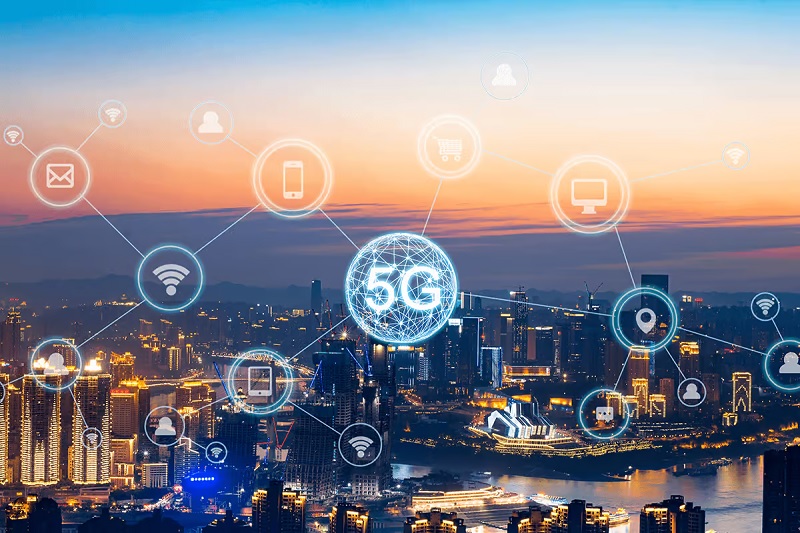
For most consumers, the arrival of 5G felt like a simple upgrade: a new icon in the top corner of a smartphone screen and slightly faster video streaming on the morning commute. That early framing sold the technology short. While 4G LTE gave rise to the mobile app economy, ride-sharing, and on-demand media, 5G was engineered for a much broader mandate. It is less a faster version of cellular internet and more a foundational rebuild of how machines, infrastructure, and people exchange data across the globe.
As standalone 5G networks mature across North America, Europe, and Asia, the real transformation is happening far beyond personal smartphones. Factories are cutting the cords on robotic assembly lines, rural towns are getting fiber-like home internet without a single trench being dug, and hospitals are moving real-time diagnostics outside clinical walls. Understanding how 5G reshapes global connectivity requires looking past headline download speeds and examining the architectural shifts underneath.
Beyond Faster Downloads: What Actually Makes 5G Different
Speed grabs attention in carrier commercials, yet bandwidth is only one piece of the puzzle. 5G networks are built around three distinct technical capabilities that previous generations could not deliver simultaneously.
The first is ultra-low latency. Latency measures the delay between sending a signal and receiving a response. On a typical 4G network, that lag hovers around 30 to 50 milliseconds—imperceptible when loading a web page, but far too slow for a remote-operated crane or an autonomous vehicle reacting to a pedestrian. Standalone 5G networks push latency down into the single-digit millisecond range, making wireless connections responsive enough for real-time physical control.
The second breakthrough is massive device density. Older cellular towers choke when thousands of people gather in a stadium or when a warehouse fills with connected sensors. 5G is designed to support up to a million connected devices per square kilometer, allowing dense clusters of cameras, trackers, and industrial equipment to communicate simultaneously without dropping packets.
The third pillar is network slicing. Rather than treating every byte of traffic the same way, telecom operators can partition a single physical 5G network into multiple virtual lanes. One slice can guarantee uninterrupted, ultra-low-latency bandwidth for emergency responders or automated factory machinery, while another handles routine consumer browsing. Paired with a flexible mix of low-band, mid-band, and high-frequency millimeter-wave spectrum, carriers can tailor coverage for long-distance reach or extreme urban capacity depending on what a specific region needs.
Reshaping Industrial Operations and Enterprise Networks
Some of the most measurable returns on 5G investment are taking place inside industrial facilities that historically relied on miles of Ethernet cabling or congested enterprise Wi-Fi. Wi-Fi works well for laptops in an office, but it struggles with handoffs when equipment moves across a massive floor plan and offers limited guarantees around interference and reliability.
Private 5G Networks on the Factory Floor
Manufacturers across the automotive, aerospace, and electronics sectors are increasingly deploying private 5G networks dedicated exclusively to their campuses. By owning or leasing localized spectrum, a factory can run autonomous mobile robots, wireless vision-inspection cameras, and augmented-reality maintenance headsets without competing against public cellular traffic.
Because machines no longer need to be physically wired to fixed stations, plant managers can reconfigure production lines in days rather than weeks. High-definition cameras mounted above conveyor belts stream uncompressed video to local servers, spotting microscopic soldering defects or alignment errors in real time before faulty units move further down the line.
Smarter Logistics, Ports, and Supply Chains
Global shipping hubs and distribution centers operate on tight margins where every hour of delay ripples through the supply chain. Major container ports now use 5G to coordinate remote-controlled quay cranes, track thousands of shipping containers simultaneously, and monitor temperature-sensitive cargo from dock to warehouse. Logistics operators gain continuous visibility into fleet locations, fuel usage, and cold-chain integrity, turning reactive supply chains into predictable, data-driven networks.
Bridging the Digital Divide Through Fixed Wireless Access
For decades, expanding high-speed internet to rural communities, suburban fringes, and developing regions ran straight into an economic wall. Trenching fiber-optic cable across miles of farmland, rocky terrain, or sprawling neighborhoods costs tens of thousands of dollars per mile, leaving millions of households stuck on sluggish DSL or congested legacy satellite links.
5G has changed that math through Fixed Wireless Access (FWA). Instead of running a physical line to every house, telecom providers beam high-capacity mid-band or millimeter-wave 5G signals from a nearby tower directly to a compact receiver sitting on a customer’s windowsill or rooftop.
In the United States, FWA has rapidly become one of the fastest-growing segments of home broadband, giving families and small businesses genuine competition in markets long dominated by a single cable monopoly. Globally, the impact is even more pronounced. Across parts of Latin America, Southeast Asia, and Africa, regions that largely bypassed landline infrastructure are now using 5G wireless broadband to connect local clinics, schools, agricultural cooperatives, and small enterprises at a fraction of the cost and timeline of wired rollouts.
Accelerating Healthcare, Mobility, and Smart Infrastructure
When wireless connectivity becomes fast, reliable, and nearly instantaneous, critical public services can operate outside traditional physical boundaries.
In healthcare, 5G elevates telemedicine from basic video calls to genuine remote care. Connected ambulances equipped with 5G routers can transmit live high-resolution ultrasound feeds, ECG readings, and vital signs directly to emergency room specialists while the patient is still miles away, allowing surgical teams to prepare before the doors even open. Rural clinics can share massive MRI and CT imaging files in seconds with specialists at major metropolitan hospitals, shrinking diagnostic wait times for patients who cannot easily travel.
Municipalities and transportation agencies are tapping into the same reliability to modernize aging infrastructure. Vehicle-to-everything (V2X) communication allows cars, traffic signals, road sensors, and transit buses to exchange hazard warnings in milliseconds, alerting drivers to sudden braking ahead or emergency vehicles approaching an intersection. Meanwhile, electric utilities use dense networks of 5G-connected grid sensors to detect line faults instantly, balance renewable energy loads from rooftop solar installations, and reroute power before localized outages cascade across a neighborhood.
Powering the Convergence of Edge Computing and AI
Artificial intelligence and connected devices generate staggering volumes of raw data. Sending every video frame from a smart intersection or every telemetry reading from a wind turbine back to a centralized cloud data center hundreds of miles away is both slow and expensive.
5G unlocks the practical potential of multi-access edge computing (MEC), which places compact computing servers right at the edge of the cellular network, close to where data is created. By pairing high-throughput 5G links with local processing power, applications can run complex AI models in milliseconds without waiting for a round trip to a distant cloud region.
This pairing is what makes lightweight augmented-reality glasses, real-time language translation, interactive retail displays, and responsive autonomous drones viable in everyday environments. Heavy computation happens just down the street on an edge server rather than inside the device itself, keeping hardware lighter, cooler, and far more energy-efficient.
Real-World Hurdles on the Road to Global Maturity
Despite steady progress, the global rollout of 5G is neither uniform nor effortless. Delivering on the technology’s full promise requires overcoming significant operational and financial hurdles.
High-frequency 5G signals carry immense data capacity, yet they travel shorter distances and struggle to penetrate thick concrete walls, foliage, or coated glass. Achieving consistent coverage requires dense deployments of small-cell antennas mounted on streetlights, utility poles, and building rooftops. Securing municipal permits, negotiating pole attachments, and funding massive capital expenditures have slowed deployments in many cities.
Fragmented spectrum policies across countries also complicate matters for global device makers and multinational enterprises trying to standardize hardware across borders. At the same time, connecting millions of new industrial machines, sensors, and municipal systems dramatically expands the cybersecurity attack surface. Organizations adopting 5G can no longer rely on perimeter defenses alone; they must pair network upgrades with strict zero-trust security, encrypted traffic, and continuous device authentication.
The Next Chapter of Global Connectivity
Early 5G deployments relied heavily on existing 4G core infrastructure to get off the ground quickly. Now, as carriers complete the shift to cloud-native, standalone 5G cores and begin rolling out 5G-Advanced capabilities, the network itself is becoming smarter, more energy-efficient, and better equipped to support satellite integration for truly remote coverage across oceans, deserts, and polar routes.
The defining mark of mature infrastructure is that people stop thinking about it—electricity, clean water, and paved roads simply work in the background while commerce and daily life flourish on top of them. That is the trajectory 5G is on today. By making high-capacity, real-time wireless connectivity dependable almost anywhere, it is quietly setting the baseline for how the global economy will build, move, and communicate for the next decade.